Abstract:
Water content is a critical parameter influencing the quality, stability, and functionality of liquids and gases across numerous industries, including energy, chemical manufacturing, pharmaceuticals, and environmental monitoring. Accurate and reliable measurement of trace and bulk water content is essential for quality control, regulatory compliance, and process optimization.
Introduction:
The presence of water in liquids and gases can significantly affect physical properties, reactivity, and performance. In many industrial and scientific applications, excessive moisture leads to corrosion, degradation of materials, reduced product quality, or system failures.
Thus, highly sensitive and reproducible water content analysis is vital for ensuring process integrity and product reliability.
Measurement Principle:
Water content determination is commonly performed using methods such as:
Karl Fischer Titration (for liquids and gases)
Coulometric and Volumetric Techniques (depending on the expected water concentration)
Gas Extraction Coupled with Water Detection (e.g., thermal extraction followed by measurement)
In advanced systems, the sample is prepared by extraction if necessary, and the water is quantified with high precision by electrochemical or chemical titration methods, fully compliant with international standards (e.g., ASTM D6304, ISO 760).
System Overview:
Modern water content analyzers feature:
Automated sampling and titration cycles to reduce operator influence
High sensitivity, with detection limits down to the low ppm (parts per million) or even ppb (parts per billion) range
Versatile sample handling for liquids, gases, and pastes
Robust data evaluation software for real-time results and statistical analysis
For gaseous samples, water vapor is typically extracted using an inert carrier gas before analysis.
Applications:
Typical fields of application include:
Determination of residual water in transformer oils, lubricants, and fuels
Moisture control in industrial gases and natural gas pipelines
Water analysis in pharmaceutical products and chemical reagents
Monitoring of environmental water pollution in air and soil gases
The ability to detect and quantify water at trace levels enables early intervention, improved quality assurance, and enhanced process efficiency.
Conclusion:
Accurate water content measurement is a cornerstone of modern quality control and process safety. High-performance analyzers provide reliable, fast, and reproducible results, supporting critical decisions in research, manufacturing, and compliance environments.


H2S Analyzers of the Sulfimax-GX Series
For the summary determination of highly volatile sulfides in aqueous solutions and oils, we have combined a highly efficient gas extraction with a selective detection method.
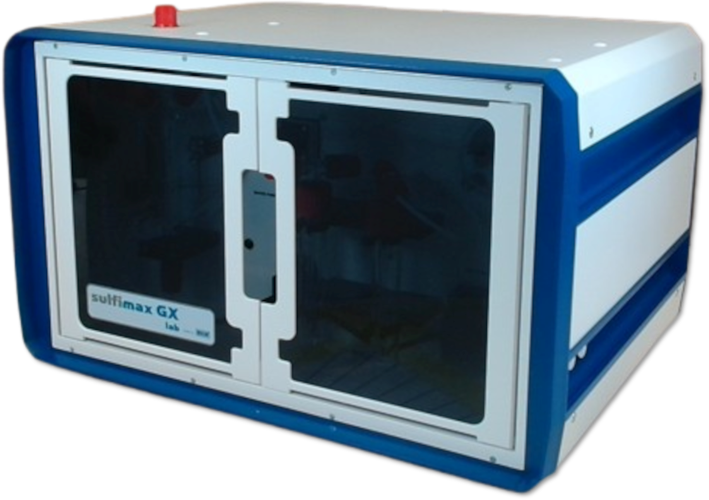
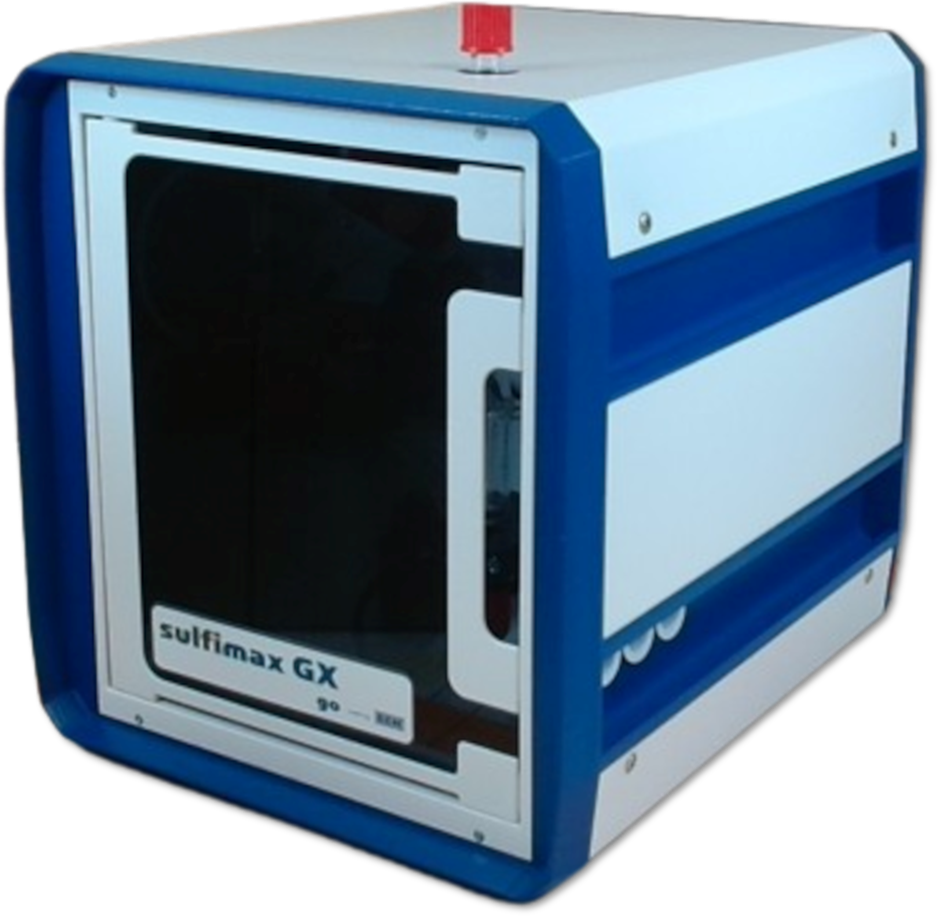
For hydrogen sulfide analysis, we offer the H₂S analyzer Sulfimax GX in the laboratory version Lab and in the compact version Go. With both versions, H2S can be determined in gases as well as in liquids.
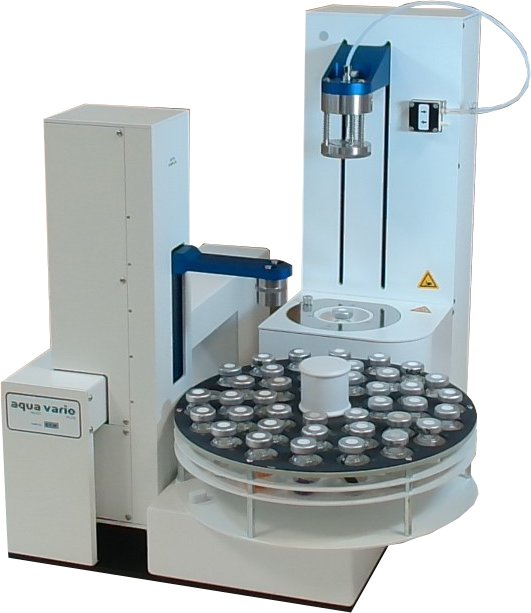
An autosampler for liquid samples is available for the Sulfimax GX Lab. Due to its compact design, the Sulfimax GX Go requires less laboratory space and is suitable for on-site applications.
An external H2S headspace module can be connected to both versions, enabling the measurement of hydrogen sulfide in solid samples as well.
Determination of H₂S in liquids, oils, viscous, and solid samples:
The Sulfimax GX H2S analyzer can be extended with a heating module for headspace-based sample preparation. The Sulfimax GX Vario PLUS (version with autosampler) enables, for the first time, fully automated H2S determination without manual handling of digestion reagents.
For continuous monitoring of H2S in the airspace above wastewater, the online analysis system Sulfimax GX online GAS is available. This allows demand-oriented dosing of wastewater treatment chemicals.